Screened or Overlooked? The Uneven State of G6PD Testing in America and How to Fight for Your Right to Know
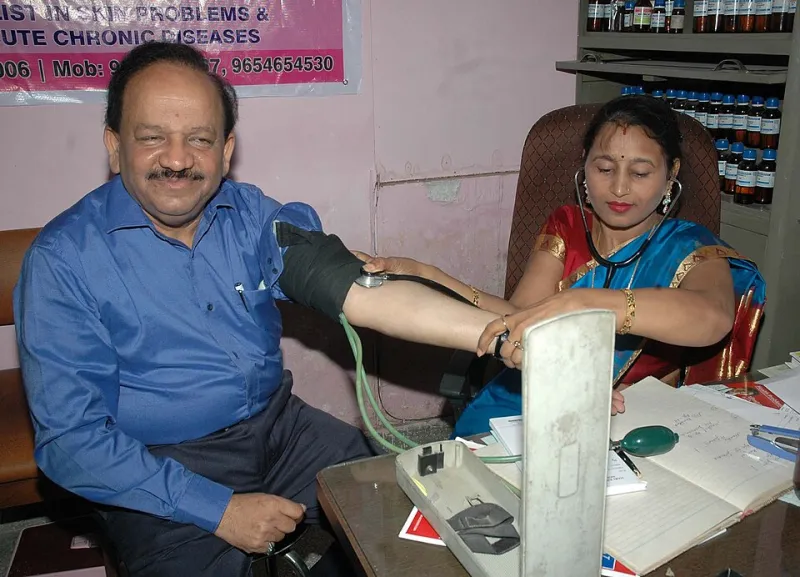
Photo: Ministry of Health and Family Welfare, GODL-India, via Wikimedia Commons
For a condition that affects an estimated 400 million people worldwide—and disproportionately impacts communities of African, Mediterranean, Middle Eastern, and Southeast Asian descent—G6PD deficiency remains remarkably underdiagnosed in the United States. The reasons are not rooted in a lack of medical technology. Reliable, cost-effective tests for glucose-6-phosphate dehydrogenase deficiency have existed for decades. Instead, the diagnostic gap is largely a product of systemic inconsistency: inconsistent newborn screening policies, uneven insurance coverage, and a healthcare culture that has historically underinvested in conditions that predominantly affect communities of color.
Understanding why so many Americans remain unaware of their G6PD status is the first step toward changing that reality—both individually and collectively.
A Patchwork of Newborn Screening Programs
In an ideal world, every infant born in the United States would be tested for G6PD deficiency as part of routine newborn screening. That world does not yet exist. The Recommended Uniform Screening Panel (RUSP), maintained by the U.S. Department of Health and Human Services, serves as a federal advisory guide for state newborn screening programs. As of now, G6PD deficiency is not included on the RUSP, which means states have no federal mandate to test for it.
The result is a deeply uneven landscape. A small number of states and hospital systems have adopted G6PD screening on a voluntary or pilot basis, particularly in regions with large at-risk populations. However, the vast majority of American newborns are never tested. A child born in one state may be screened; a child born just across a state line may not be. This geographic lottery has real consequences: without early identification, families have no opportunity to implement the dietary precautions and medication safety protocols that can prevent hemolytic crises.
Advocacy organizations and researchers have long argued for G6PD's inclusion on the RUSP. The evidence supporting screening is substantial—the condition is common, the test is inexpensive, and early identification demonstrably reduces preventable harm. Yet institutional momentum has been slow, and patients and families often bear the cost of that inertia.
Racial and Ethnic Disparities in Diagnostic Attention
G6PD deficiency does not discriminate, but the healthcare system's attention to it often does. Research consistently shows that conditions affecting predominantly non-white populations receive less diagnostic prioritization, research funding, and clinical education than those with a broader or predominantly white patient demographic. G6PD deficiency is a striking example of this pattern.
Black Americans are among the most frequently affected groups in the United States, with prevalence estimates ranging from 10 to 14 percent among Black males. Yet clinicians in many settings do not routinely screen Black patients for the condition, even when presenting with symptoms—such as jaundice, fatigue, or dark urine—that are consistent with hemolytic anemia. The assumption that a patient's presentation will be explained by more common diagnoses can cause G6PD deficiency to be repeatedly overlooked.
Similarly, patients of Mediterranean, Middle Eastern, and South Asian descent who present with hemolytic episodes may encounter providers unfamiliar with the elevated prevalence of G6PD deficiency within their communities. This knowledge gap is not the fault of individual clinicians so much as it reflects a systemic failure to adequately train healthcare professionals on conditions that affect racially and ethnically diverse populations.
Insurance Coverage and Access Barriers
Even when a clinician recommends G6PD testing, financial barriers can stand in the way. The standard diagnostic test—a quantitative spectrophotometric assay measuring enzyme activity—is generally considered affordable in the context of laboratory medicine. However, insurance coverage for this test varies. Some plans categorize it as a diagnostic laboratory test and cover it without issue; others may require prior authorization or classify it as non-essential, leaving patients with unexpected out-of-pocket costs.
For uninsured or underinsured Americans, the calculus becomes more difficult. Community health centers and federally qualified health centers (FQHCs) may offer testing at reduced cost, and direct-to-consumer laboratory services have made certain enzyme activity tests more accessible. However, navigating these options requires a level of health literacy and system familiarity that not all patients possess—particularly those from communities that have historically experienced barriers to healthcare access.
How to Advocate for Your Own Screening
Knowledge of the barriers is necessary, but it is not sufficient. Patients and families who believe they may be at risk for G6PD deficiency have both the right and the tools to advocate for appropriate testing. The following steps can help.
Know your risk profile. G6PD deficiency is X-linked, meaning it is inherited through a gene on the X chromosome. Males with one affected X chromosome are fully deficient; females may be carriers or, in some cases, significantly deficient themselves. If you have African, Mediterranean, Middle Eastern, or Southeast Asian ancestry, your risk is elevated. A family history of unexplained anemia, neonatal jaundice, or adverse reactions to certain medications or foods should also raise your index of suspicion.
Request the test explicitly. Do not wait for a provider to suggest G6PD screening unprompted. During your next primary care appointment, ask directly: "I would like to be tested for G6PD deficiency. Given my ethnic background and family history, I believe this is medically appropriate." You are entitled to make this request, and a well-informed provider will take it seriously.
Understand what you are asking for. The most informative test is a quantitative G6PD enzyme activity assay, which measures how much functional enzyme your red blood cells produce. A simple qualitative screening test (often described as a "spot test") can identify severely deficient individuals but may miss carriers or those with intermediate enzyme activity. Ask your provider which test is being ordered.
Document your advocacy. If a provider declines to order testing without a compelling clinical rationale, ask them to document their reasoning in your medical record. This creates an accountability trail and may be useful if you need to escalate your request to a specialist or seek a second opinion.
Engage patient advocacy resources. Organizations focused on G6PD awareness, rare disease advocacy, and health equity can provide support letters, patient guides, and connections to knowledgeable specialists. You do not have to navigate this process alone.
The Broader Stakes
The G6PD testing gap is not merely an inconvenience. Every undiagnosed individual is a potential hemolytic crisis waiting to happen—triggered by a common antibiotic, an antimalarial medication, or even a well-intentioned supplement. The costs of that crisis, measured in emergency department visits, hospitalizations, and long-term health consequences, far exceed the cost of a single enzyme activity test.
Closing this gap requires action at multiple levels: federal advocacy to add G6PD to the RUSP, insurer accountability for equitable coverage, and ongoing clinical education. But it also requires informed, empowered patients who understand their rights and refuse to accept oversight as inevitable. At G6PD Awareness, our mission is to ensure that every person at risk has the knowledge they need to demand the care they deserve.