It Runs in the Family: A Practical Guide to G6PD Inheritance, Carrier Status, and Protecting the People You Love
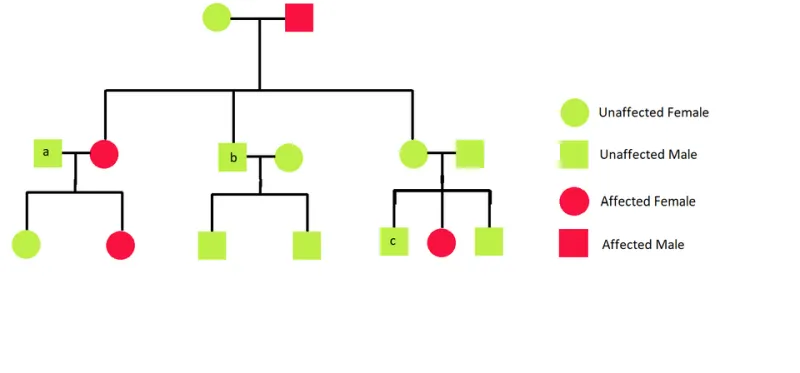
Photo: Nathanieljoyce, CC BY-SA 4.0, via Wikimedia Commons
For many people, a G6PD diagnosis arrives as a surprise — a blood test ordered for an unrelated reason, a newborn screening result, or a hemolytic crisis that finally prompts the right question. But G6PD deficiency does not appear from nowhere. It travels deliberately through generations, encoded in the X chromosome, quietly shaping the health of siblings, children, and cousins who may never have been tested. Understanding how this inheritance works is not merely an academic exercise. It is, in the truest sense, an act of advocacy for the people you love.
The Chromosome at the Center of Everything
G6PD deficiency is caused by mutations in the G6PD gene, which sits on the X chromosome. Because humans inherit one X chromosome from each biological parent — or, in the case of biological males, one X from their mother and one Y from their father — the pattern by which this condition passes through families follows a specific and predictable logic known as X-linked recessive inheritance.
Here is what that means in practical terms. Biological males carry only one X chromosome. If that X chromosome carries a deficient G6PD variant, the male has no second copy to compensate. He will be fully affected by the condition. Biological females, by contrast, carry two X chromosomes. If only one carries the deficient variant, she is considered a carrier. If both X chromosomes carry deficient variants — a rarer situation that occurs when both biological parents contribute affected copies — she will be fully affected as well.
This distinction matters enormously, because it explains why G6PD deficiency is diagnosed far more frequently in males than in females, and why the condition so often appears to "skip" generations or manifest differently across family members.
What It Means to Be a Carrier
The term "carrier" is frequently misunderstood, and in the context of G6PD deficiency, that misunderstanding can cause genuine harm. Many carrier females are told, either directly or by implication, that they have nothing to worry about. This is not always accurate.
Carrier females typically have G6PD enzyme activity levels somewhere between those of fully affected individuals and those with two unaffected X chromosomes. However, a biological process called X-inactivation — in which one X chromosome in each cell is randomly silenced — means that some carrier females end up with a significant proportion of cells expressing the deficient variant. Depending on which X chromosome is preferentially active across red blood cells, a carrier female may experience symptoms ranging from mild to severe.
In clinical practice across the United States, carrier females are frequently undertested and underdiagnosed. Standard G6PD enzyme activity assays may return results in the "normal" or borderline range even when a woman carries a pathogenic variant, particularly if her blood is drawn during or shortly after a hemolytic episode, when the oldest and most deficient red blood cells have already been destroyed. Molecular genetic testing, which identifies the specific G6PD mutation rather than measuring enzyme activity alone, offers a more reliable picture for women with suspected carrier status.
If you are a woman with a family history of G6PD deficiency and you have experienced unexplained fatigue, jaundice, or reactions to medications or foods, it is worth asking your physician specifically about carrier testing — and about whether a DNA-based test may be more informative than an enzyme activity assay alone.
Reading Your Family Tree
Once you understand the X-linked recessive pattern, your family history becomes a map. Consider the following scenarios and what they suggest about risk.
An affected father and an unaffected mother. The father will pass his single X chromosome — the one carrying the deficient variant — to every biological daughter. Every daughter will therefore be a carrier. He will pass his Y chromosome to every biological son, meaning no son inherits G6PD deficiency from him directly. This pattern is one reason the condition can seem to disappear from one generation and resurface in the next.
A carrier mother and an unaffected father. Each biological son has a 50 percent chance of inheriting the deficient X chromosome and being fully affected. Each biological daughter has a 50 percent chance of being a carrier. This is the transmission pathway responsible for the majority of affected males.
Two carrier parents, or a carrier mother and an affected father. Biological daughters in this scenario have a meaningful probability of inheriting deficient variants from both parents, potentially resulting in full expression of the condition in a female — a situation that remains clinically underrecognized in the US.
Drawing out even a rough three-generation family tree and noting who has been diagnosed, who has experienced unexplained anemia, and who has had adverse reactions to medications or fava beans can help you and your physician identify who in your family warrants screening.
Talking to Siblings, Parents, and Children
Knowing your own genetic status creates both an opportunity and a responsibility. Sharing that information with biological relatives is not always straightforward, particularly across generational or cultural divides where medical conversations may feel intrusive or alarming.
A few principles can make these conversations more productive. First, frame the information as protective rather than alarming. A sibling who learns they may carry a G6PD variant can take simple, concrete precautions — avoiding certain medications, alerting their physician before surgery, and ensuring their own children are tested. Second, offer to share written resources. Many primary care physicians in the United States have limited familiarity with G6PD deficiency, and arriving at an appointment with a one-page summary of the inheritance pattern and relevant testing options can move the conversation forward significantly. Third, consider genetic counseling, both for yourself and for family members who want support interpreting their results. A certified genetic counselor can help translate complex information into actionable guidance without overstepping into medical advice.
For parents of children newly diagnosed with G6PD deficiency, the diagnosis is also an implicit signal to test siblings — particularly brothers, who share the same maternal X chromosome pool — and to revisit the mother's own carrier status if it has not been formally established.
Navigating the US Healthcare System
Newborn screening for G6PD deficiency is not universally mandated across all fifty states, which means that diagnosis in childhood often depends on clinical suspicion rather than systematic testing. Adults who discover their status later in life may find that their primary care physicians are unfamiliar with the nuances of X-linked inheritance or uncertain about how to counsel family members.
In these situations, patient self-advocacy becomes essential. Requesting a referral to a hematologist or a medical geneticist is entirely appropriate when a G6PD diagnosis raises questions about family risk. Organizations such as the American College of Medical Genetics and Genomics maintain directories of specialists who can provide more in-depth evaluation. Patient advocacy communities, including those organized around G6PD awareness, can also connect individuals with others who have navigated similar diagnostic journeys.
Knowledge as Protection
G6PD deficiency is, in many respects, a manageable condition. With the right information, the vast majority of affected individuals and carriers can live full, healthy lives. But that management depends on awareness — awareness that extends beyond the individual patient to encompass the entire biological family network.
Your diagnosis is not only your story. It is a thread woven through your family tree, connecting generations in ways that are only visible once you know where to look. Understanding the genetics of G6PD deficiency, communicating that understanding to the people you love, and advocating for appropriate testing within a healthcare system that does not always prioritize this condition are among the most meaningful contributions any patient can make — not just to their own health, but to the health of those who come after them.