Misread Minds: When G6PD Deficiency Hides Behind Behavioral and Neurodevelopmental Diagnoses in Children

For many families, the journey begins the same way. A child starts struggling in school. Teachers report that he cannot focus, that she melts down without warning, that he seems exhausted no matter how much sleep he gets. A pediatrician makes a referral. An evaluation follows. And then comes a diagnosis—attention deficit hyperactivity disorder, autism spectrum disorder, generalized anxiety, or an unspecified behavioral condition—accompanied by a treatment plan that may include therapy, classroom accommodations, and sometimes psychiatric medication.
Years can pass before anyone thinks to check for glucose-6-phosphate dehydrogenase deficiency.
G6PD deficiency is the most common enzyme disorder in the world, affecting an estimated 400 million people globally and disproportionately impacting individuals of African, Mediterranean, Middle Eastern, and Southeast Asian descent. In the United States, where newborn screening for G6PD remains inconsistent across states, a significant number of children grow up undiagnosed. When their bodies encounter oxidative stressors—certain foods, medications, infections, or even environmental exposures—they experience hemolytic episodes that can produce symptoms the medical system is poorly trained to associate with a metabolic condition.
The consequences of that training gap can be profound.
When the Body Speaks, and the Wrong Answer Is Heard
During a G6PD hemolytic crisis, red blood cells are destroyed faster than the body can replace them. The resulting anemia reduces oxygen delivery to every organ, including the brain. Children experiencing these episodes may present with profound fatigue that looks like depression or school refusal, cognitive dulling that resembles learning disabilities, emotional dysregulation that mirrors ADHD or autism-related behavioral profiles, and intermittent jaundice that can be dismissed as minor or unrelated.
Because these episodes are often triggered by specific exposures and may resolve partially on their own, a child might appear relatively functional during a clinical appointment and then deteriorate again at home or school. This cyclical pattern can actually reinforce a behavioral diagnosis, since clinicians may interpret the inconsistency as evidence of a psychological rather than physiological cause.
Pediatric hematologists who work with G6PD-affected families describe a pattern they encounter with troubling regularity: children who have been in special education programs for years, or who have been trialed on multiple psychiatric medications, only to have a routine blood panel or a parent's persistent questioning eventually surface the underlying enzyme deficiency.
Voices From the Diagnostic Wilderness
Consider the experience of a mother in Houston whose son spent three years receiving behavioral therapy and stimulant medication for a presumed ADHD diagnosis before a hematologist at a children's hospital identified moderate G6PD deficiency during a workup for recurrent anemia. Looking back, she could trace his worst behavioral episodes to periods when he had been given ibuprofen for minor illnesses—a common over-the-counter medication that carries known oxidative risk for G6PD-deficient individuals. Once the enzyme deficiency was identified and his medication exposures were modified, his cognitive and behavioral presentation improved substantially.
Similar accounts appear repeatedly in online G6PD patient communities, where parents describe children who were labeled as oppositional, emotionally immature, or intellectually delayed before a metabolic explanation emerged. These families frequently report that the diagnosis came not through the medical system's initiative but through their own research, often prompted by a relative in another country where G6PD screening is more routine.
The emotional toll of these misdiagnosis journeys is considerable. Children may internalize stigmatizing labels during formative developmental years. Parents may spend years doubting their instincts or being told that their child's struggles are behavioral in origin and therefore require behavioral solutions.
The Clinical Blind Spot
Why does this misdiagnosis pattern persist? Several factors converge to create the problem.
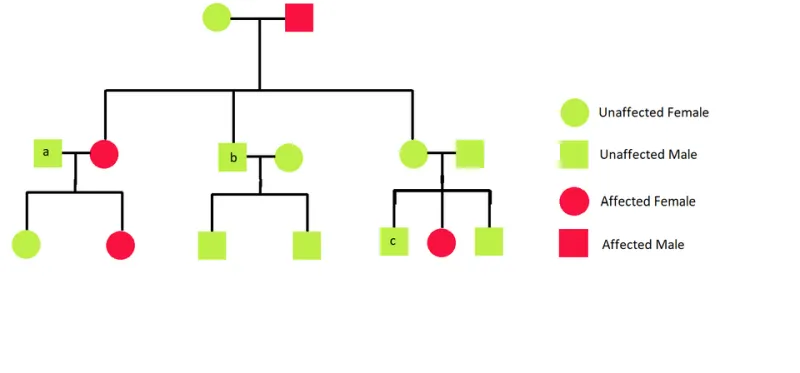
First, G6PD deficiency is rarely included in the differential diagnosis for behavioral or neurodevelopmental presentations, even when a child's ethnic background places them in a higher-risk demographic. Clinicians are trained to follow symptom clusters toward the most statistically common diagnoses, and for a child presenting with inattention and irritability, ADHD is far more likely to come to mind than an X-linked enzyme disorder.
Second, the episodic nature of G6PD-related symptoms means that a child may not be in active crisis during evaluation. Mild chronic anemia can produce a baseline of fatigue and reduced cognitive performance that is subtle enough to be attributed to motivation, sleep habits, or neurodevelopmental differences rather than oxygen deprivation at the cellular level.
Third, standard pediatric workups do not automatically include G6PD enzyme activity testing. Unless a clinician specifically orders this test, it will not appear in a routine blood panel. In states where newborn screening does not include G6PD—which is the majority of U.S. states—a child may reach adolescence without ever having been tested.
What Parents and Providers Can Do
For parents who suspect that their child's behavioral or cognitive difficulties may have a metabolic component, advocacy begins with asking direct questions. If your child belongs to an ethnic group with elevated G6PD prevalence, or if there is any family history of anemia, neonatal jaundice, or known G6PD deficiency, that history should be communicated clearly to every provider involved in your child's care.
Request a complete blood count with reticulocyte count and, specifically, a G6PD enzyme activity test. Be aware that testing during or immediately after a hemolytic episode can produce falsely normal results, because deficient red blood cells are destroyed preferentially during a crisis, temporarily leaving a higher proportion of cells with more normal enzyme activity. Testing should ideally occur during a stable period.
Keep a symptom diary that tracks behavioral episodes alongside potential triggers—illnesses treated with specific medications, dietary changes, or unusual fatigue. This kind of longitudinal documentation can be invaluable in helping a clinician recognize a pattern that points away from a purely behavioral explanation.
For healthcare providers, the ask is equally straightforward: broaden the differential. When a child from a higher-risk demographic presents with unexplained cognitive or behavioral changes, particularly if those changes are episodic or accompanied by pallor, jaundice, or dark urine, G6PD testing should be part of the workup. The test is inexpensive, widely available, and could spare a child years of misdirected treatment.
Reclaiming the Correct Diagnosis
A behavioral or psychiatric diagnosis is not inherently wrong, and many children carry both a neurodevelopmental condition and G6PD deficiency simultaneously. The goal of this conversation is not to dismiss the validity of those diagnoses but to ensure that a treatable metabolic condition is never allowed to masquerade as one when it should not.
Children with G6PD deficiency who are correctly identified and whose triggers are properly managed can lead fully functional lives. The enzyme deficiency does not disappear, but its consequences can be dramatically reduced through informed avoidance of known triggers and the involvement of a knowledgeable medical team.
The children who spent years in diagnostic limbo—labeled, medicated, and misunderstood—deserved better from the systems meant to serve them. Ensuring that the next generation of G6PD-affected children receives timely, accurate answers is not merely a clinical priority. It is a matter of patient advocacy, health equity, and the fundamental right of every child to be correctly known.